White Rose Estate Explores Whole Cluster Pinot Noir
Produced in partnership by Travel Dundee and the Dundee Hills Winegrowers Association
Across the Dundee Hills, the last grapes have come in from the vineyards and now rest in the wineries that dot our famed region. Harvest is only the beginning of the story. Winemaking teams are carefully watching the magic and science of fermentation as fruit slowly transforms into wine.
This year, White Rose Estate is finding a new way to highlight what they’re best known for: whole cluster fermentation. Their Explorer Series will feature bottlings at three different levels: 100%, 67%, 33%, and 0% whole cluster, allowing customers to taste how the presence of woody stems shapes a wine’s flavor, character, and aromatics.

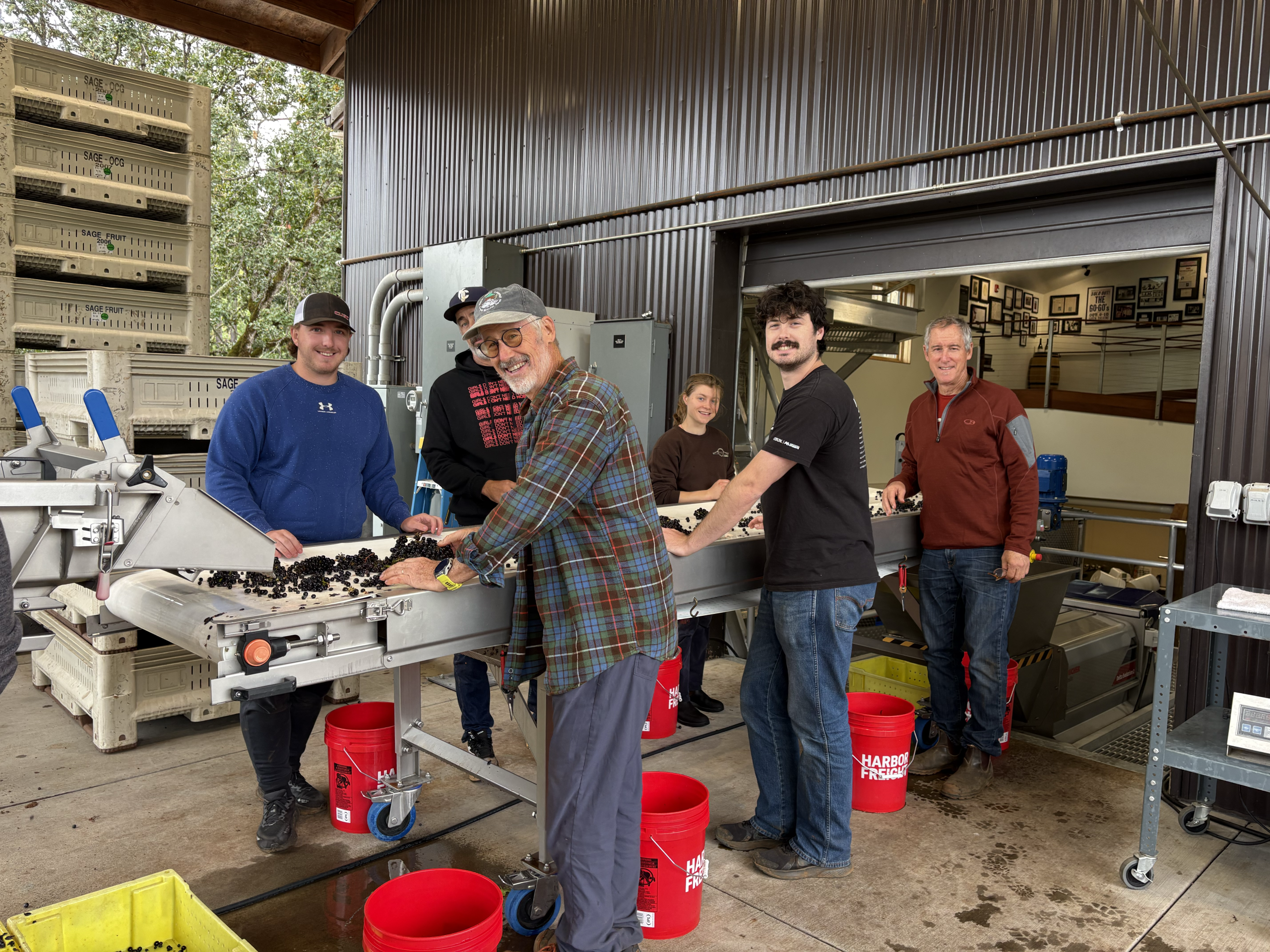
Their journey began in mid-September, when the grapes were harvested and loaded into fermentation tanks. For nearly two weeks, the berries held their form, slowly releasing color and juice under the weight of three tons of fruit. Two weeks later, the winemaking team opened the tanks to literally dig out the still-intact clusters and transfer them to a traditional basket press, where they gently separated the juice for its next phase of fermentation. Digging out three tons of grape clusters by hand is taxing, though custom-forged tools make the job easier. It’s a reflection of White Rose’s philosophy: no task is too great and no detail too small when crafting Pinot Noir.
The process is a feast for the senses. Juice squeezes from the berries as the fog rolls in. The air smells sweet and musty from the fermenting fruit as wasps buzz around the discarded skins and stems. The clusters themselves, softened and partially fermented, even while intact, give an early glimpse of the wine to come.

The freshly pressed juice is transferred back into stainless steel tanks where temperature can be more carefully controlled, providing the yeasts with the ideal environment to complete their work. From here, the wines will rest in barrels, be blended in June, bottled in August, and will continue to age until they are ready for release. Soon, the vines will shed their leaves and drop into dormancy as winter approaches, readying themselves for the next Dundee Hills vintage.
Photos by Molly Bailey (click photos below for larger images)